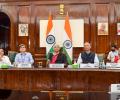
Seven of the meetings will be held in late November or early December at the finance ministry, as is the norm.
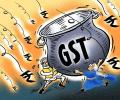
GST collection rose 11 per cent to over Rs 1.65 lakh crore in July as a result of anti-evasion measures and higher consumer spending. This is the fifth time since the rollout of the Goods and Services Tax (GST) regime that monthly collections have crossed the Rs 1.60 lakh crore mark -- making it the new normal. "Gross GST revenue collected in July is Rs 1,65,105 crore of which CGST is Rs 29,773 crore, SGST is Rs 37,623 crore, IGST is Rs 85,930 crore (including Rs 41,239 crore collected on import of goods) and cess is Rs 11,779 crore (including Rs 840 crore collected on import of goods)," the finance ministry said in a statement.

The GST Council, headed by Finance Minister Nirmala Sitharaman and comprising representatives of all states and Union territories, will have its 37th meeting in Goa against the backdrop of economic growth hitting a six-year low of 5 per cent in the first quarter of the current fiscal.
The Union Cabinet on Wednesday approved changes to GST laws to levy a 28 per cent tax on the full face value of bets in online gaming, casinos and horse race clubs, sources said. The amendments to the Central GST (CGST) and Integrated GST (IGST) acts, which were approved by the GST Council last week, are likely to be introduced in the ongoing monsoon session of Parliament, which will end on August 11. The GST Council in its 51st meeting on August 2 recommended amendments to the Schedule III of the CGST Act, 2017, to provide clarity on the taxation of supplies in casinos, horse racing and online gaming.

Revenue buoyancy of GST will be key to improve the resource position of both central and state governments.

The list of exempted goods from central excise duty has shrunk from 400 items in 2011-12 to 300 now.

While the government has not made the report public, sources said the panel had recommended a sharp cut in all taxes on the gold business, including import duty and goods and services tax which amounts to over 13%.

'Sin tax' is a globally prevalent practice under which products like alcohol and tobacco attract higher rates of tax.

Several opposition ruled states expressed concern over Centre's decision to allow enforcement directorate (ED) to share information with GST Network, with finance minister of AAP-ruled Punjab Harpal Singh Cheema on Tuesday saying it amounts to 'tax terrorism' and scaring small business. The finance ministry, through a notification, brought in an amendment to the provisions of Prevention of Money Laundering Act (PMLA), 2002, as per which GSTN, which handles the technology backbone of Goods and Services Tax, has been included in the list of entities with which ED will share information. At the 50th GST Council meeting on Tuesday, Aam-Aadmi Party ruled Delhi and Punjab voiced concerns over the notification and demanded a discussion.

'Like every Budget, this time, too, there is chatter around tinkering with the long-term capital gains tax.' 'Investors may not want to jump into the markets until there is clarity on this front.'

GST authorities have issued show cause notices worth Rs 1 lakh crore to online gaming companies for tax evasion so far, a senior official said on Wednesday. The official, however, said there is no data yet of foreign gaming companies registering in India since October 1. The government has amended the GST law, making it mandatory for overseas online gaming companies to register in India from October 1.

GST compensation law allows for imposition of cess on certain luxury goods like tobacco, high-end cars and aereated drinks to create a corpus for compensating states for any loss of revenue in the first five years
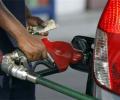
The Centre would need the concurrence of 20 states out of 29 to impose a GST on petroleum

The government is mulling changes in the income tax laws to bring cryptocurrencies under the tax net, with some changes that could form part of the Budget next year, a top official said. Revenue secretary Tarun Bajaj said that in terms of income tax, some people are already paying capital gains tax on the income from cryptocurrency, and in respect of Goods and Services Tax (GST) also the law is "very clear" that the rate would be applicable as those in case of other services.
The GST Council is scheduled to meet next on November 10 and may consider lowering tax rates on a host of goods such as handmade furniture, plastic products and daily use items like shampoo.

About a dozen states cutting across party lines on Wednesday pitched for extending the mechanism to compensate states for revenue lost from the implementation of GST beyond June 30, but no decision was taken. Briefing reporters about deliberations at the two-day meeting of the GST Council in Chandigarh, Union Finance Minister Nirmala Sitharaman said finance and other ministers of 16 states spoke on the compensation issue. Of the 16 states, 3-4 spoke of evolving their own revenue stream to break from the compensation mechanism, she said.
The principal commissioner has been made responsible for developing and approving any intelligence, conducting search, and completing investigations and relevant subsequent actions, including at the lower field formations, points out T N C Rajagopalan.

The Goods and Services Tax (GST) Council, chaired by Union Finance Minister Nirmala Sitharaman, will likely consider on Saturday a GST rate cut for Covid-19 relief essentials and drugs for treating the black fungus disease and might leave the vaccines untouched. The meeting is being held following a report submitted by a Group of Ministers (GoM) to the GST Council on Monday. The GoM, set up by the Council on May 28, was mandated to look at tax exemption and concessions on various Covid items including vaccines, drugs, and equipment.

The panel of state finance ministers is likely to recommend a uniform GST levy of 28 per cent on online gaming irrespective of whether it is a game of skill or game of chance, sources said. However, it is likely to suggest a revised formula for calculating the amount on which the Goods and Services Tax (GST) would be levied. Currently, online gaming attracts 18 per cent GST.

Ask rediffGURU and PF expert Milind Vadjikar your insurance, stocks, mutual fund and personal finance-related questions.

Hospitality and travel sector players on Tuesday demanded infrastructure status for the hotel industry besides measures such as tax exemption on LTA annually to boost domestic tourism ahead of the Union Budget. They also recommended removal of the current TDS levied on automated bookings for internal or closed user groups such as business travel platforms and reducing the total number of licenses required to establish a hotel. "A full-blown infrastructure status for the hotel sector and further rationalisation of the Goods and Services Tax (GST) and a Central single window clearance for hotel projects are some of the major expectations from the Budget 2024," Roseate Hotels & Resorts CEO Kush Kapoor said in a statement.

Reaching a consensus might also get tougher, as already seen with issues like inclusion of natural gas in GST and imposition of a sugar cess, both central proposals being resisted.

The Centre is against giving any shock in the first year of the rollout by bringing in new services.

The premium on insurance policies will get costlier by 3 per cent to 7 per cent, depending upon the rate fixed by the GST Council from April 1, 2017, says Harjot Singh Narula.
Overhaul of the goods and services tax (GST) structure, including possible changes in the tax slabs, may now be taken up only after the 2024 Lok Sabha elections, given the number of states that are going to the polls in its run-up. "No major overhaul of tax rates is expected in GST until the end of next fiscal year. One major reason for this is that some members of the group of ministers (GoM) - mandated to look at rate rationalisation by the GST Council - are from poll-bound states. Later, this may lead to reconstitution of the panel," a senior government official told Business Standard. Besides, both the Centre and states are not in favour of frequent changes in the tax rates amid inflationary uncertainties; they believe any major change should be brought in after extensive deliberations, according to the official.
Agra has long been known for the Taj Mahal, but it is also a manufacturing hub filled with micro, small and medium enterprises (MSMEs) that make everything from electronic components to metal products, from paints and chemicals to footwear. And five years after the introduction of the Goods and Services Tax (GST), the MSMEs here complain that while the indirect tax regime has been transformative, cutting out the need to file multiple taxes, its biggest drawback has been the delay in credit refunds. Whoever you speak to - MSME owners, tax lawyers, or industry bodies like the National Chambers of Industries and Commerce (NCIC), Agra Footwear Manufacturers and Exporters Chamber (AFMEC) and Agra Shoe Manufacturers Association (ASMA) - they all emphasise that the GST continues to face some key challenges.

These have to be passed in this session to meet the September 15 deadline for switching over to the new indirect tax regime, Jaitley said.

E-sports experts say the burgeoning sector will not be affected by the Goods and Services Tax (GST) Council's recent decision to levy a blanket 28 per cent tax on online gaming, which is being viewed by the industry as a death blow to gaming companies.

"GST should not become a 'grossly scary tax'. It should be a 'good and simple tax'," Surjewala said.

The panel suggested inclusion of alcohol and petroleum products in GST, as is being demanded by the Congress.
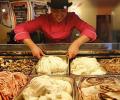
Certain clarifications by the GST Council, such as tax rates on ice cream parlours and royalty paid to state governments over mineral rights, may turn out to be contentious and lead to litigation, feel some experts. The council, at its meeting in Lucknow on Friday, had clarified that ice cream parlours will attract goods and services tax (GST). The clarification said these parlours sell already manufactured ice cream and such supply would draw 18 per cent tax.
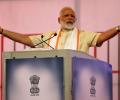
Modi said the Goods and Services Tax has within one year of its launch led to over 70 per cent jump in indirect taxpayer base, demolished check-posts and merged 17 taxes and 23 cesses into one single tax.
The GST Council in its next meeting may look at raising the lowest tax slab to 8 per cent, from 5 per cent, and prune the exemption list in the Goods and Services Tax regime as it looks to increase revenues and do away with states' dependence on Centre for compensation, sources said on Sunday. A panel of state finance ministers is likely to submit its report by this month end to the Council suggesting various steps to raise revenue, including hiking the lowest slab and rationalising the slab. Currently, GST is a four-tier structure attracting a tax rate of 5, 12, 18 and 28 per cent.

Maharashtra raises vehicle registration fee, Tamil Nadu ups entertainment tax
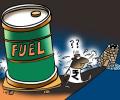
The GST Council might on Friday consider taxing petrol, diesel and other petroleum products under the single national GST regime, a move that may require huge compromises by both central and state governments on the revenues they collect from taxing these products. The Council, which comprises central and state finance ministers, in its meeting scheduled in Lucknow on Friday, is also likely to consider extending the time for duty relief on COVID-19 essentials, according to sources in the know of the development. GST is being thought to be a solution for the problem of near-record high petrol and diesel rates in the country, as it would end the cascading effect of tax on tax (state VAT being levied not just on the cost of production but also on the excise duty charged by the Centre on such output).

The GoM is likely to submit an interim report to the Council on pruning the list of items that at present do not attract the levy.
All GST anti-profiteering complaints would be dealt with by the Competition Commission of India (CCI) from December 1 as the extended tenure of National Anti-profiteering Authority ends this month, an official said on Tuesday. A notification in this regard is expected to be issued by the finance ministry later this month, the official added. The National Anti-profiteering Authority (NAA) was set up in November 2017 under Section 171A of Goods and Services Tax (GST) law to check unfair profiteering activities by registered suppliers.

The Congress will respond comprehensively only after specificity emerges in the proposals, reports Amit Agnihotri.

'I found it unbelievable that L&T said 45,000 jobs were waiting to be filled because of unavailability of suitable skillsets.' 'So, when the Opposition sweepingly says there are no jobs, I'm sorry... I'm not saying it's raining jobs, but there are jobs. The (skill) gap has to be bridged.'
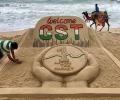
The finance ministry has set up two committees of state finance ministers which would rework rate slabs, review GST exempt items and identify potential evasion sources. Four years after the roll out of the national Goods and Services Tax (GST), which replaced the complex indirect tax structure, the centre and states have started work on moving towards a "simpler rate structure in GST" by reviewing the current rate slabs, including special rates and merger of rate slabs. The Group of Ministers (GoM) on rate rationalisation would also review items under inverted duty structure to help minimise refund payout, and review the supply of goods and services exempt under GST with an objective to expand the tax base and eliminate breaking of input tax credit (ITC) chain.
